
Kent County Court Records After Arrest
A Kent County arrest can create more than one record stream. The sheriff can hold arrest, transport, release, or booking information. The court record begins when a complaint, information, indictment, bond order, hearing notice, or other filing is created in the criminal case. The official local court-record contact is County Clerk and 39th District Clerk Craig Harrison, whose office serves both county clerk and district clerk functions for Kent County.
This distinction matters because Kent County has no online jail roster. A person may not appear in a local inmate list, yet a court case may still exist after charges are filed. For custody and booking detail, use Kent County inmate records. For booking photos, use Kent County jail mugshots. For formal court records after a jail arrest, start with the clerk and statewide court search channels.
Find Kent County Court Records After Arrest
No Kent County-only criminal case portal was located on the official county site. The statewide court portal is re:SearchTX, which indicates that public users must register. Access can depend on case type, filing status, document security, court participation, and user role. If a record does not appear online, the clerk remains the local source for case-status and copy questions.
- Ask the sheriff whether a case or cause number has been assigned after the arrest.
- Call the County Clerk / 39th District Clerk at 806.237.3881 if the case number is unknown.
- Register with re:SearchTX and search by defendant name, case number, county, or court filter when available.
- Open the case record and compare the listed charges with any booking or warrant information.
- Use the Texas DPS conviction search only for conviction-history research, not live custody status.
Kent County Court Search Fields
The statewide court-search path is different from an inmate lookup. It is built around cases, parties, courts, and filings rather than housing status. The best search key is a cause number from bond paperwork, clerk correspondence, citation, or court notice. A name search may work, but common names need date, county, and court filters.
| Field Label | Type | Required | Notes |
|---|---|---|---|
| Account registration/login | Account | Yes | re:SearchTX says public users must register. |
| Party name | Text | Optional | Use the defendant's legal name when no case number is known. |
| Case or cause number | Text | Optional | Best search field when supplied by the clerk, bond papers, or court notice. |
| Court or county | Filter | Optional | Use Kent County and the relevant county or 39th District court path. |
| Filing or hearing date | Date/filter | Optional | Helpful when the arrest date is known. |
Kent County Arrest Charging Documents
The first arrest charge is not always the charge that appears in court records after a jail arrest. Law enforcement may book a person on an allegation or warrant. The prosecutor then reviews the facts and files the formal charge in the proper court. Felony-level matters can involve the 39th District Attorney, while misdemeanor matters can involve county-level prosecution depending on the offense and court.
| Document | Common Use | What to Check |
|---|---|---|
| Complaint | Sworn allegation used early in a criminal case | Alleged facts, charge, date, court, and complainant details if public. |
| Information | Prosecutor-filed charging document for certain offenses | Filed charge, offense level, prosecutor action, and amendments. |
| Indictment | Grand-jury charging document, often for felonies | Count list, offense level, grand-jury filing, and court assignment. |
Kent County Prosecutor Role
The official district attorney page identifies Mike Fouts as 39th District Attorney, with the office in Haskell. That district-level structure matters for Kent County court records after arrest because felony prosecution may involve an office outside Jayton while the clerk and district clerk contact remains local. The official district judge page identifies Judge Shane Hadaway for the 39th District.
The prosecutor can decline a case, file charges, seek indictment, amend charges, reduce charges, dismiss counts, or proceed toward plea or trial. Court records track those steps when they are filed and public. The arresting officer's booking charge may remain useful background, but the court-filed charge controls the case record.
Kent County Charge Status
Charge status shows where a court record stands after a jail arrest. A charge can be pending, amended, reduced, dismissed, or resolved by plea, verdict, deferred adjudication, or other disposition. Do not treat an arrest as a conviction. Court records after an arrest should be read line by line because one case can have more than one count, and each count can have a different result.
| Status | Meaning |
|---|---|
| Pending | The charge or case has not reached a final disposition. |
| Amended | The charge, wording, count, or pleading has changed by filing or order. |
| Reduced | The charge was changed to a lesser offense or lower level. |
| Dismissed | The charge ended without a conviction on that count. |
| Convicted | A guilty plea, verdict, or adjudication created a conviction record. |
Bond Records After Arrest
Texas bail rules are governed by Code of Criminal Procedure Chapter 17. Kent County does not publish a jail bond desk page or accepted payment list, so the practical path is to call the sheriff for current custody location and then follow the court or receiving jail's payment rules. Bond records can show amount, type, conditions, holds, and later modifications.
| Bond Type | How It Works |
|---|---|
| Cash bond | Money is posted directly if authorized by the court or receiving facility. |
| Surety bond | A licensed bail bond company posts bond and assumes appearance risk. |
| Personal recognizance | Release is based on a promise to appear and court conditions. |
| No-bond hold | Release is not allowed until the court or hold status changes. |
| Detainer or hold | Another agency, warrant, parole matter, or ICE issue may block release. |
Kent County Warrant Records
No official Kent County active-warrant search, sheriff warrant list, most-wanted list, or app-only warrant feature was located. For law-enforcement warrant questions, the sheriff's office is the local starting point. For bench warrants, failure-to-appear matters, or case-linked warrants, the clerk and court record may be more useful. A person who believes they have an active warrant should use counsel or contact the court carefully rather than relying on a web search.
If a warrant record is public and releasable, it may identify the person's name, issuing court, warrant date, charge or alleged violation, case number, bond amount, warrant type, and status. Active investigations, sealed cases, juvenile matters, and public-safety concerns can limit disclosure under the Texas Public Information Act.
Charges vs Convictions
A charge is an accusation or filed allegation. A conviction is a final finding of guilt or accepted plea. Court records after a jail arrest can show both, but they are not the same. Texas DPS Criminal History Conviction Name Search is conviction-focused and account-based, so it does not replace the clerk or re:SearchTX for a live case search.
| Point | Charge | Conviction |
|---|---|---|
| Stage | Filed allegation or count | Final guilt finding or plea outcome |
| Proof | Based on probable cause and prosecutor filing | Based on plea, verdict, or adjudication |
| Can change | May be amended, reduced, or dismissed | Can be appealed, set aside, or affected by later orders |
Sealed and Expunged Arrest Records
Texas expunction is governed by Code of Criminal Procedure Chapter 55. Expunction is a court process for qualifying records, not a phone request to remove an arrest from every database. Sealing and nondisclosure are separate concepts, and eligibility depends on the record, disposition, offense type, waiting periods, and court order.
| Point | Sealed / Restricted | Expunged |
|---|---|---|
| Public view | Hidden or limited from many public searches | Treated as removed under the court order |
| Agency duty | Access may remain for certain authorized users | Agencies must follow the expunction order |
| How it happens | Court order or statutory process | Court order under Texas expunction law |
Kent County Court Source
The official Kent County Clerk and 39th District Clerk page identifies the local records office for court-record questions after an arrest.
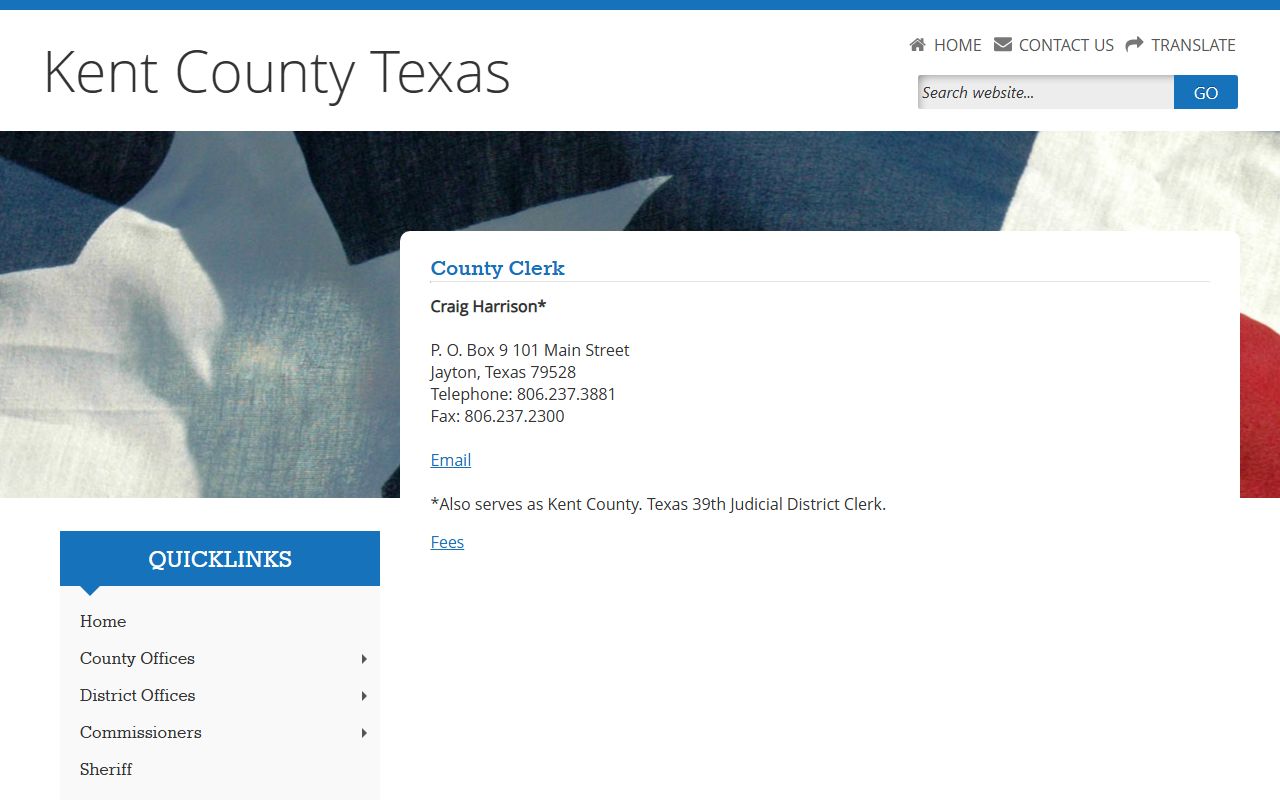
That local clerk contact is important because no Kent County-only criminal case portal was found on the official county website.